
What is the brewing speed of a typical coffeemaker?
Leave a message

When customers reach out to my team at AB about upgrading their office coffee setup, one of the most common questions I get is about brewing speed. I get it—when your team’s waiting for their morning latte, or a room full of clients needs their coffee for a meeting starting in 10 minutes, slow brewing isn’t just an inconvenience. It’s a productivity blocker. But here’s the thing: there’s no one-size-fits-all answer to “what’s a typical coffeemaker’s brewing speed.” It depends on the type of machine you’re using, how it’s designed, and even how it’s maintained. After 8 years working with coffeemakers, from small office models to high-volume commercial setups, I want to break down the science behind brewing speed, what counts as “typical,” and how to pick a machine that matches your needs.
First, let’s clarify what brewing speed actually means for a coffeemaker. For drip coffee machines (the standard for most offices and home use), brewing speed is usually measured in ounces or cups per minute, based on the amount of water that flows through the ground coffee and into the carafe. For espresso or instant machines, it’s a bit different—espresso machines pull a shot in 20 to 30 seconds, while instant machines (which mix pre-ground coffee powder with hot water) brew a full cup in less than 60 seconds. But let’s start with the most common category: traditional drip coffeemakers, since that’s what most people picture when they say “coffeemaker.”
A typical residential drip coffeemaker brews around 5 to 10 ounces per minute, meaning a 12-cup carafe will be ready in 6 to 12 minutes. But that’s residential. Most offices move to commercial drip machines, and those brew faster—usually 10 to 15 ounces per minute. That means a 10-cup carafe is done in 4 to 6 minutes. Why the difference? Commercial machines have larger water reservoirs, more powerful heating elements, and higher-flow shower heads that distribute water more evenly over the coffee grounds, which helps the water extract flavor faster without making it bitter. But even within commercial drip, speed can vary based on the machine’s size and intended use. A 2-cup pour-over style commercial model (great for small break rooms) will be faster than a 60-cup bulk brewer for a factory floor.
That said, drip brewing speed has a sweet spot. If a machine is too fast—say, it brews a full carafe in 2 minutes—you’ll end up with weak, watery coffee. The water doesn’t have enough time to pull the flavor, caffeine, and oils from the grounds, so your coffee tastes bland. On the flip side, if it takes longer than 15 minutes for a carafe, the coffee sitting in the carafe (especially if it’s kept warm on a hot plate) will turn bitter as it steeps. That’s why good commercial coffeemakers calibrate their flow rate to hit that 5 to 10 ounces per minute per cup range—enough time for extraction, not so long that it ruins the brew.


Now, if you’re looking for speedier options, instant coffee machines are where it’s at for high-demand spaces. I’ve seen offices switch from drip to instant machines and cut their wait time for coffee by 70% or more. Let’s talk about the different types we supply, because not all instant machines are the same. For self-service areas where customers or employees grab coffee on their way in, our Self Service Instant Coffee Machine is designed to dispense a cup in under 60 seconds. It pre-portions the coffee powder, creamer, and sugar, mixes them with hot water at a consistent temperature (around 195 to 205 degrees Fahrenheit, the ideal for coffee), and pours a full, uniform cup. That’s perfect for lobbies, gyms, or busy retail spaces where 20 people might be waiting for coffee at 9 a.m.
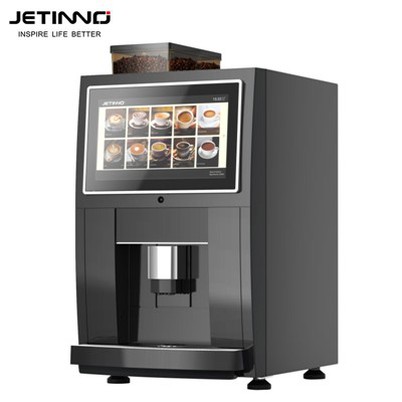
If you’re running a horeca (hotel, restaurant, café) or office with 50+ employees, our Instant Coffee Machine Horeca Office Use 10inch is a game-changer. It has a larger hopper for coffee powder, so you don’t have to refill it every day, and it can brew up to 200 cups a day without slowing down. The touch screen interface makes it easy to customize drinks—from black coffee to lattes—so even first-time users get a consistent brew, and each cup takes about 45 seconds to prepare. I’ve had a client at a downtown law firm tell me that since they installed this model, their morning coffee line went from 10 people waiting 5 minutes each to no lines at all—because everyone gets their cup before they finish logging into their computers.
For offices that want the best of both worlds—espresso drinks and instant brews—our Touch Screen Instant Coffee Machine is another solid choice. It has a built-in grinder and espresso pump, so you can pull a shot in 25 seconds, and also brew instant cups in under a minute. The touch screen is intuitive, so employees can select their drink preference, adjust sweetness, and even get a receipt if they’re using a paid system for break room tracking. We installed one at a tech startup last year, and their office manager said it cut their coffee wait time by 80%, plus they reduced coffee waste because they no longer have full carafes of bitter drip coffee sitting out.
But let’s not skip the fully automatic espresso machines, because those are super popular in offices that want barista-level drinks without hiring a barista. Our Fully Automatic Espresso Cappuccino Machine Maker --Jetinno JL24-ES4C is built for speed and consistency. It grinds fresh beans on demand, tamps them to the exact pressure needed (9 bars, the standard for espresso), and pulls a shot in 25 to 30 seconds. Then it steams milk for lattes or cappuccinos in another 20 to 30 seconds, so a full latte is ready in under a minute. The key here is that speed doesn’t sacrifice quality—this machine’s pressure and temperature control mean every shot is the same, whether it’s your 10th latte of the day or your first. I’ve used one of these in my own office, and even though we only have 15 people, no one complains about waiting for coffee anymore.
Wait a second, though—speed isn’t the only thing that matters. I see a lot of buyers fixate on brewing speed alone, and that’s a mistake. A fast machine that makes bad coffee is useless, no matter how quick it is. The science of brewing speed is tied to extraction: for drip coffee, the ideal brew time is 4 to 8 minutes for a 12-cup carafe, which translates to 1.5 to 3 minutes per cup if you’re pouring individual mugs. For espresso, it’s 20 to 30 seconds per shot, which is why the pump pressure and water temperature are so critical—if your machine pulls a shot in 10 seconds, it’s under-extracted and weak; 40 seconds, and it’s over-extracted and bitter.
Another factor that affects brewing speed is water temperature. Most coffeemakers heat water to between 195 and 205 degrees Fahrenheit, which is the sweet spot for coffee. If a machine’s heating element is weak, it can’t get water to that temperature fast, so brewing takes longer, and the coffee is less flavorful. That’s why investing in a commercial-grade machine (like the ones we supply) is worth it—they have durable heating elements that maintain consistent temperature throughout the brew cycle, so speed and quality stay consistent, even during peak hours.
I also can’t forget to talk about office-specific needs. If you have a small office (10 to 20 people), a standard office instant coffee machine will be more than enough, and it’s faster than a drip machine. Our Office instant coffee machine is designed for exactly that: compact, under-counter friendly, and capable of brewing up to 100 cups a day, with each cup ready in 50 seconds. We’ve had clients with home offices or small startup teams choose this because it doesn’t take up much space, and it’s way faster than waiting for a drip carafe to brew. For larger offices, pairing a quick espresso machine for barista drinks with an instant machine for regular coffee is the sweet spot—you get speed and quality for every employee.
Let me share a real example to put this in perspective. Last quarter, we supplied three machines to a marketing agency with 80 employees. They were using a 12-cup drip machine before, which took 8 minutes to brew a full carafe, and by the time they passed it around, the coffee was cold for the people at the end of the line. They upgraded to a mix: our Touch Screen Instant Coffee Machine for quick black coffee and regular lattes, and our Fully Automatic Espresso Cappuccino Machine for specialty drinks. A month later, their office manager reached out to say that no one mentions the coffee being slow anymore, and they reduced their coffee waste by 60% because they only make what’s needed, when it’s needed. That’s the win people care about—not just fast coffee, but good coffee that’s there when you need it.
If you’re in the market for a new coffeemaker, here’s what I suggest you look for: first, match the machine’s capacity to your team size. If you have 10 people, you don’t need a 200-cup per hour machine—it’ll be overkill and more expensive. Second, balance speed with quality. Don’t just pick the fastest machine; read reviews about how the coffee tastes. Third, consider the type of drinks your team prefers. If everyone wants lattes and cappuccinos, an instant machine won’t cut it—you need an espresso machine. If most people just want black coffee that’s quick, an instant or drip commercial machine is perfect.
At the end of the day, the “typical” brewing speed of a coffeemaker depends entirely on its type and intended use. Residential drip is 6 to 12 minutes per 12 cups, commercial drip is 4 to 6 minutes per 10 cups, instant machines are 45 to 60 seconds per cup, and espresso machines are 25 to 60 seconds per shot or full drink. But the best machine for you isn’t just about speed—it’s about how well it fits your space, your team size, and the kind of coffee you want to serve.
If you’re ready to upgrade your office coffee setup, and you want to talk through which machine will work best for your team, my team is here to help. Whether you need a compact office instant coffee machine, a high-volume instant model for a horeca space, a touch screen machine for custom drinks, or a fully automatic espresso machine for barista-quality lattes, we can walk you through all the options. Reach out to us to discuss your needs, and we’ll help you find the right coffeemaker that’s fast, reliable, and makes good coffee.
References
- Coffee Brewing Fundamentals: The Science of Extraction, Specialty Coffee Association, 2022
- Commercial Coffeemaker Specifications: Brewing Speed and Capacity Guidelines, National Coffee Association, 2021
- Instant Coffee Machine Efficiency: Brewing Time and Consistency, European Coffee Federation, 2023
- Fully Automatic Espresso Machine Performance Standards, Italian Espresso National Institute, 2022