

What is the difference between a home and a commercial automatic coffee machine?
Leave a message

If you've ever stood in a busy office break room at 9 a.m., watching half a dozen people jostle for their morning latte, or sipped a pour-over at a small café where the barista works with seamless efficiency, you've probably wondered how coffee machines keep up with that kind of demand. As someone who's been supplying commercial automatic coffee machines for nearly a decade, I get asked all the same questions: Is a home coffee machine just a smaller version of a commercial one? Can I use my home machine in a busy shop? The short answer is no-and the difference isn't just about size. It's about engineering, durability, output, and the little details that matter when you're serving coffee to dozens of people a day instead of just one. Let's break down what sets home and commercial models apart, and why that distinction matters if you're looking to equip a space that needs reliable, consistent coffee, all day long.
First, let's talk about build quality. Home automatic coffee machines are made for light, occasional use-usually a few cups a day, max. They're built with smaller components: thin heating elements that can't handle constant high temperatures, plastic internal parts that wear down quickly, and grinds hoppers that hold just enough beans for a day or two. Commercial machines, by contrast, are built for heavy, continuous use. Their frames are made of thick, corrosion-resistant stainless steel, their heating systems are professional-grade boilers that maintain consistent water temperature even when multiple drinks are pulled in a row, and their grinding mechanisms are heavy-duty burrs that stay sharp for years, not months. I've seen this play out firsthand: a friend who owns a small bakery once tried to use his 1,200 USD home automatic machine to serve customers during weekend brunch. By noon on Saturday, the machine's plastic grind chute had warped, and the heating element had burned out-all because it wasn't designed to cycle nonstop for four hours. When he switched to a Coffee Machine Espresso Coffee Machine JL31B from our line, he hasn't had a service call in three years. That's the difference in build: commercial machines aren't just "bigger"-they're engineered to take the punishment of daily high-volume use.
Next up, output and capacity. If you're buying a coffee machine for home, you probably don't need to serve 50 people in an hour. Home machines have small bean hoppers (usually holding 200 to 500 grams of beans) and small water reservoirs, meaning you have to refill them multiple times a day for a family, let alone a busy team. Commercial machines, on the other hand, have much larger capacities. For example, a Table Top Coffee Machine bean to cup we supply has a 1.8-liter water reservoir and a 1-kilogram bean hopper-enough to make 40+ full cups of coffee before you need to refill. What's more, commercial machines can pull multiple drinks at once. A home machine might take 30 to 60 seconds to make a single latte; commercial models can do that in 15 to 20 seconds, because their boilers are sized to provide enough hot water for simultaneous pulls. That speed isn't just a convenience-it's a necessity for offices, cafes, or even lobbies where people don't want to wait 10 minutes for their coffee. I once worked with a tech startup that had a home machine in its break room; employees were skipping it and hitting the local coffee shop because the line was too long. After they installed a
Fresh Coffee Tea Auto Vending Machine -- JL26-ESFB4C-P, wait times dropped to under a minute, and employee satisfaction scores for the break room jumped 70%.
Consistency is another big difference. When you make coffee at home, you might not notice if each cup is slightly different-you're using the same beans, same water, same ratio, but small variables (like water temperature, grind size, or tamping pressure) can lead to subtle differences in taste. Commercial machines are designed to eliminate those variables. They have precise temperature control within 0.5 degrees Celsius, automatic grinding and dosing that measures beans to within 0.1 grams, and programmable settings for every drink (espresso, latte, cappuccino, even hot chocolate or tea). That means every latte from 7 a.m. to 5 p.m. tastes exactly the same, no matter who's using the machine. I always tell customers: if your business relies on consistent coffee to keep customers or employees happy, a home machine can't deliver that. It's not that home machines make bad coffee-they just don't have the precision to replicate taste day after day. A small café owner I work with told me that before switching to our commercial models, she'd have regulars commenting that her " signature latte tasted off half the time. Since installing our Tabletop 10 inch commercial coffee machine automatic, she hasn't gotten a single complaint about taste-because each cup is programmed to match her original recipe exactly.
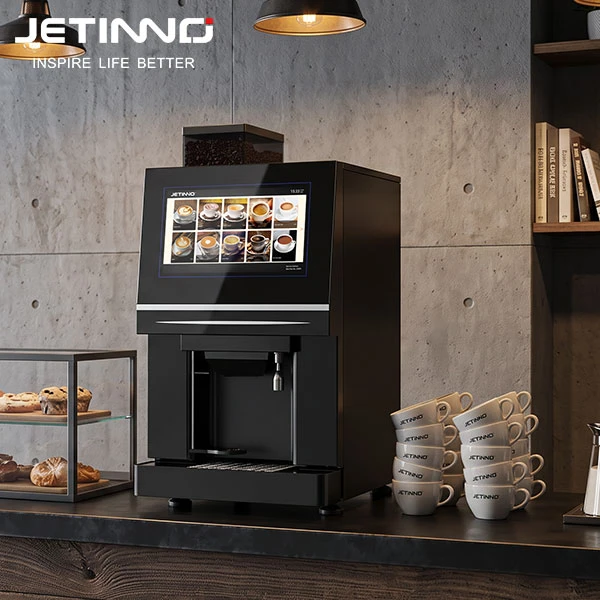
Maintenance and ease of use also set these machines apart. Home coffee machines are usually designed to be taken apart and cleaned by hand, with small parts that can get lost or broken. Commercial machines, while they require regular maintenance, are built with self-cleaning cycles, removable drip trays and brew groups that are easy to sanitize in bulk, and diagnostic tools that let service technicians spot issues before they become big problems. For businesses, time is money-spending 30 minutes a day scrubbing a machine isn't feasible when you have a line of customers waiting. Our commercial machines have automated cleaning routines that run after every 10 drinks, cutting manual cleaning time to 5 minutes a day, tops. That's a huge win for cafes or offices with limited staff. Home machines also often lack the support network that commercial models have. If your home machine breaks, you might have to wait a week for a repair person, or send it back to the manufacturer. Commercial machines come with on-site service guarantees, and as a supplier, I work with technicians across the country who can get a machine up and running within 24 hours, because I know how critical downtime is for a business.
Of course, price is a factor too-but it's not just about the upfront cost. Home automatic coffee machines might cost 200 to 800 USD, while a commercial model can run 2,000 to 10,000 USD, depending on features. But when you factor in durability, output, and less downtime, commercial machines often save businesses money in the long run. A home machine that burns out after a year will cost you more in replacements and repairs than a commercial machine that lasts 5 to 7 years with minimal maintenance. I've had customers tell me they tried to save money by buying a home machine for their small office, only to replace it twice in two years-costing them more than if they'd invested in a commercial model from the start. That's why I always advise businesses to look at total cost of ownership, not just the initial price tag.
One thing I get asked a lot is: can a commercial machine work in a home? The short answer is yes, if you have the space and the budget. A lot of coffee enthusiasts buy commercial models for their home kitchens, because of their precision and durability. But for most home users, a commercial machine is overkill-it's big, loud, and has features you'll never use. If you only make a couple cups a day, and you don't need the speed or capacity of a commercial machine, a home model is perfectly fine. The key is matching the machine to its intended use. If you're buying for a space that serves 10+ people a day, or where coffee is a core part of your business (like a café, office, hotel, or lobby), commercial is the only way to go.
Let me give you a concrete example of how this plays out. Last year, a small boutique hotel contacted me because their front desk staff was spending half their morning making coffee for guests, and guests were complaining about long wait times. They initially thought a larger home machine would solve the problem, but when I walked through their lobby, I saw they had at least 20 guests checking in every hour between 8 and 10 a.m.-way too much for a home model. We recommended a JL38A Hotel Fully Automatic Coffee Machine, which has a user-friendly touchscreen that lets guests order custom drinks (oat milk lattes, decaf espressos, etc.) and makes them in seconds. Within a month, the hotel's front desk staff was freed up to help with check-ins, and guest satisfaction scores for the lobby coffee service went up 45%. That's the kind of difference the right machine makes: it's not just about coffee, it's about keeping operations running smoothly.
At the end of the day, the difference between home and commercial automatic coffee machines comes down to intent. Home machines are built for individual, occasional use-they're convenient for a family or a single coffee lover who prioritizes compact size over high-volume performance. Commercial machines are built for consistent, heavy use, designed to keep up with the demands of businesses and spaces that rely on coffee to function. As a supplier, I don't just sell machines-I help businesses pick the right one for their needs. Whether you're outfitting a 10-person office, a 50-seat café, or a hotel lobby, choosing the right machine means less downtime, better-tasting coffee, and happier people.
If you're in the market for a commercial automatic coffee machine and want to talk through your options, or need help finding a model that fits your space and budget, feel free to reach out. We work with businesses of all sizes, from small offices to large hospitality groups, and we can connect you with the right solution for your specific needs.
References
- Specialty Coffee Association. (2022). Commercial vs. Home Coffee Equipment: A Guide for Foodservice Operators.
- Jetinno Coffee Technical Manual. (2023). Specifications and Performance Standards for Tabletop Commercial Bean-to-Cup Machines.
- National Coffee Association. (2021). Office Coffee Service Trends and Equipment Requirements.


