
What is the maximum temperature a commercial coffee machine can reach?
Leave a message

If you've ever stood behind a busy café bar at 8 a.m., watching a barista yank a coffee machine's lever, steam curl thick from a freshly pulled espresso shot, and a milk pitcher spatter at 190°F before it's poured into a latte, you might've wondered: how hot does that machine actually get? As a commercial coffee machine supplier, I get this question all the time-from small café owners hunting for a model that delivers consistent brew without burning beans, to office managers testing vending machines for their break room, and even fellow suppliers troubleshooting brewing issues. The answer isn't a single number; it's a balance of technical design, brewing science, and what's actually required to make good coffee.
First, let's ground this in basics: home coffee machines and commercial ones are worlds apart, and their maximum temperature ranges reflect that gap. A standard drip coffee maker for home tops out around 195°F to 205°F, per the Specialty Coffee Association (SCA)'s guidelines for ideal extraction. But commercial machines-especially espresso machines, the workhorses of most coffee shops-operate on a much steeper scale. Espresso relies on forcing hot water at high pressure (9 bar, roughly 130 psi) through finely ground coffee in 25 to 30 seconds. Too little heat, and you get a sour, under-extracted shot; too much, and you'll burn the oils in coffee, leaving a bitter, ashy aftertaste. That's why commercial machines need a broader temperature range than their residential counterparts.
So what's the maximum a commercial coffee machine can reach? The short answer for standard brewing functions is 212°F to 215°F-water's boiling point at sea level, adjusted for pressure and elevation, since high-altitude areas like Denver have lower boiling points (around 202°F). But that's just brew water. Commercial machines also have separate boilers for steaming milk, which need much higher temperatures: most steam boilers run between 250°F and 300°F, sometimes even higher for heavy-duty models used in high-volume locations. Wait, that's a big jump-so the maximum temperature isn't just for brewing, it's tied to what the machine is designed to do.
Let's break this down by machine type, because "commercial coffee machine" covers a lot of ground. First, there are espresso machines, the most common type in cafes. Entry-level and mid-range espresso machines typically have dual boilers: one for brewing, one for steaming. The brew boiler is capped around 212°F to 218°F, while the steam boiler, which is pressurized, can hit up to 300°F. High-volume commercial machines, like those in 24/7 coffee chains or busy airports, often have larger, more durable boilers, and some models can push steam temperatures even higher, up to 320°F, to handle 50+ drinks an hour without slowing down. That's not a flaw in the design-It's a feature for operations that can't afford to wait for a boiler to reheat between lattes and cappuccinos.
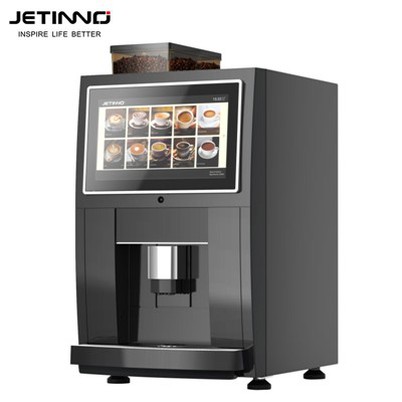
Then there are commercial brew machines, like batch brewers used for drip coffee in offices or large cafes. These are simpler, with a single boiler, and their maximum temperature is tightly regulated by the SCA to ensure consistent extraction. Most top-tier commercial batch brewers cap at 205°F to 210°F-any higher, and the coffee's delicate compounds (like the fruity acids in light-roast beans) break down into harsh, bitter flavors. It's a balance: too low, and the coffee tastes watery; too high, and it's unpalatable. That's why we design our commercial brew machines, like the one featured in the [Commercial Espresso Coffee Tea Brewer Vending Machine], to lock in that sweet spot without overheating.
Vending machines, a category that's become a huge part of the commercial coffee space for offices, schools, and convenience stores, have their own temperature rules. If you've ever had a hot coffee from a vending machine that tasted dull or burnt, it might be because the temperature is off. Our line of commercial vending machines-from the basic [Easy Tea Coffee Beverage Vending Machine--JL500-ESFB8C-P] to the touchscreen-enabled [JL500-ESFB7CP Automatic Touch Panel Espresso Tea Coffee Vending Machine]-are calibrated to hit a maximum brewing temperature of 208°F, perfect for instant and freshly ground coffee pods, and a separate steam/heating element for milk and toppings that runs up to 220°F. Wait, why lower than espresso machines? Vending machines are designed for speed and consistency over artisanal brewing. They need to heat a cup quickly, not pull a complex espresso shot, so their temperature range is tailored to get a drink that's hot, safe, and palatable, not restaurant-grade.


Now, let's talk about the edge cases. Some specialty commercial machines, like those used for cold brew or cold brew concentrate, actually run much colder, but that's a separate use case. For hot coffee, the main limits come from two places: the material the machine's components are made of, and food safety regulations. Commercial machines have to meet strict FDA standards for hot food and beverage equipment, which set a minimum hot food temperature of 165°F and a maximum safe temperature that doesn't risk burns, but also doesn't compromise flavor. Wait, that's a key point I don't see talked about enough: maximum temperature isn't just about brewing-it's about safety. A machine that hits 350°F for steaming might pull a great shot, but a barista could easily burn a hand on the steam wand, which is why most reputable commercial machine manufacturers cap steam temperatures at 300°F or below, with insulation on all external parts to prevent accidental contact.
Another factor is elevation. If you're in a city like Mexico City, which is 7,350 feet above sea level, water boils at about 202°F, so a commercial machine's maximum brew temperature will be lower than the 212°F standard at sea level. That's why all our commercial machines, including the [JL500 Fresh Coffee and Tea] unit, have adjustable temperature settings to account for elevation-something we recommend any buyer prioritize, especially if you're operating at high altitude. We've seen so many clients in Denver set their machine to the standard 212°F, only to end up with sour coffee because the actual brewing temperature was too low, not because the machine was broken.
I also get questions from people who think a higher temperature means a better cup of coffee. That's a common myth, especially among new café owners who want their shots to stand out. The reality is, optimal brewing temperature for espresso is between 195°F and 205°F-any higher, and you start extracting harsh compounds like quinine and tannins, which taste bitter and astringent. The "extra heat" some machines offer isn't for better flavor; it's for speed. If you're pulling 50 shots an hour, the boiler drops in temperature with every lever pull, so a slightly higher maximum ensures you still hit the ideal range even during the busiest rush. That's why we design our machines, like the [Free standing Tea Vending Machine hot drink touch vending], with over-temperature protection that ramps up the brew heat by a few degrees during high demand, without ever going above 215°F, to keep shots consistent.
Let's also clear up a common confusion: boiling water is 212°F, so why don't machines just use boiling water? Because at that temperature, the water vaporizes too quickly, creating bubbles that disrupt the even extraction of espresso. Espresso requires a steady flow of water through the coffee bed, so boiling water would lead to uneven saturation, over-extraction in some areas and under-extraction in others. That's why commercial machines use pressurized boilers to get the right temperature without boiling the water, which is why their maximum operating temperature is a degree or two below boiling for brew functions.
Now, if you're in the market for a commercial coffee machine, whether it's for your café, office, or retail space, how do you know what maximum temperature is right for you? It depends on what you're making, how often you're making it, and your budget. If you're a specialty café focused on artisanal espresso, you'll want a dual-boiler espresso machine with a brew max around 210°F and steam up to 300°F. If you're an office manager needing a machine that can serve 100 employees a day, a commercial batch brewer or vending machine with a max brew temp around 208°F is more than enough. And if you're somewhere in between, like a small bakery or boutique hotel, a mid-range espresso machine that balances temperature, speed, and safety will be your best bet.
At the end of the day, the maximum temperature a commercial coffee machine can reach is less important than how that temperature is used. A machine that hits 250°F but burns every shot is useless, while one that hits 205°F consistently will make dozens of great drinks a day. That's why we build our machines to prioritize both: to reach the necessary temperature for brewing and steaming, but to never go beyond what's safe, consistent, and delicious.
If you're looking to upgrade your commercial coffee setup, or you're not sure which machine is right for your space, we're here to help. Reach out to our team to discuss your needs, test our machines, and find the perfect fit for your business.
References
- Specialty Coffee Association (SCA). (2021). Coffee Brewing Guidelines: Optimum Temperature and Extraction. Specialty Coffee Association of America.
- National Restaurant Association. (2022). Commercial Food Equipment Safety and Performance Standards. National Restaurant Association Educational Foundation.
- University of California, Davis Coffee Center. (2020). The Science of Espresso: Pressure, Temperature, and Extraction. UC Davis Department of Food Science and Technology.
- Vending Market Report. (2023). Commercial Hot Beverage Vending Machine Temperature Calibration Best Practices. Vending Media Group.