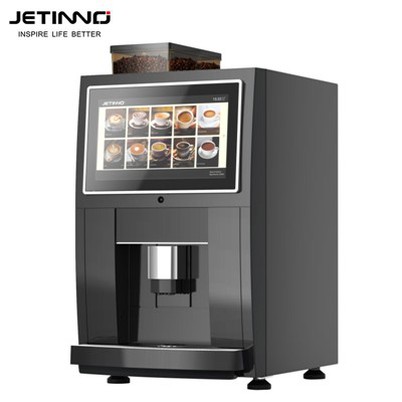

Can a Bean To Cup coffee machine make coffee with a specific extraction yield?
Leave a message

If you've ever stood in a café, watching a barista pull a shot of espresso that's perfectly balanced-neither too bitter nor too watery, with a thick, golden crema that smells like freshly roasted beans-you've probably wondered what makes that level of consistency possible. For most home users and small business owners looking to serve high-quality coffee without hiring a specialized barista, Bean To Cup (B2C) machines feel like the clear solution. But here's a question I get all the time as a B2C coffee machine supplier: Can a Bean To Cup coffee machine make coffee with a specific extraction yield?
Extraction yield, for anyone new to the term, is the percentage of coffee that's dissolved out of the ground beans into your cup during brewing. A typical ideal yield for espresso falls between 18% and 22%-too low, and the coffee will taste grassy or underdeveloped, too high, and it'll turn bitter or astringent. For commercial settings, this number isn't just a taste preference: it's the difference between repeat customers and a menu item no one orders again. And over the years, as a supplier, I've seen huge gaps in what consumers and even small business owners understand about B2C machines and their ability to hit specific extraction yields.
Let's start with the basics of how B2C machines work, because that's where the answer to this question lives. Unlike semi-automatic or manual espresso machines, which require the user to grind beans, tamp them, and adjust water flow manually, B2C machines handle every step automatically: whole bean grinding, tamping, water temperature control, brew pressure, and even post-brew cleaning. That automation is what makes them so accessible, but it's also what made many people assume they're "set it and forget it" when it comes to extraction. The truth is, modern B2C machines are far more precise than they get credit for-and most can absolutely be calibrated to target a specific extraction yield, if you know what to look for.
Early B2C models, especially those marketed for home use, had very limited settings. You could choose between a small or large drink, and that was about it. If you wanted a stronger espresso or a longer Americano, you might tweak the water volume, but there was no way to dial in extraction yield specifically. Commercial B2C machines, though-like the units we supply-changed that. They're built for consistent, repeatable performance in high-traffic environments, which means they're designed to hit exact brewing parameters every single time, across hundreds of cups a day.
Let's break down the factors that go into extraction yield, and how B2C machines control each one to hit a target. First is grind size. Finer grinds increase extraction, because the water has more surface area to interact with; coarser grinds decrease it. Early B2C machines had fixed grind settings, which meant extraction yield was fixed too. But today's models have adjustable grinders that can be fine-tuned in small increments-sometimes as little as 0.1mm-so you can shift extraction up or down by a percentage point if needed. Next is water temperature. Coffee dissolves best between 195°F and 205°F; too cold, and you get under-extraction, too hot, and you pull bitter compounds too quickly. B2C machines now have PID temperature control, which maintains that exact range throughout the entire brew cycle, so you're not losing temperature mid-brew which would throw off yield.
Brew pressure is another big one. Espresso requires 9 bars of pressure to push water through the grounds at the right rate. Too little pressure, and water moves too fast, pulling out fewer soluble compounds; too much, and you channel water through gaps in the grounds, leading to uneven extraction. Most modern B2C machines have pressure profiling capabilities, or at least consistent pressure maintenance, so you can ensure the water flows evenly through the coffee bed, leading to a uniform yield. Finally, brew time: a typical espresso shot takes 25 to 30 seconds. If you pull it in 20 seconds, you're leaving soluble compounds behind (under-extraction), if you take 40 seconds, you're over-extracting. B2C machines track brew time automatically, and many let you adjust it-so if your target yield is 19% instead of the default 21%, you can extend or shorten the brew time slightly without sacrificing consistency.

Now, I know what some of you are thinking: "If B2C machines can hit specific yields, why don't all coffee shops use them?" The answer is that not all B2C machines are equal. A basic consumer-grade B2C that costs a few hundred dollars won't have the precision to tweak extraction yield. But commercial B2C models, designed for high-volume use and consistent performance, absolutely can. Let's take some of the units we supply as examples, because that's what I know best. One of our table-top models, the Foot Standing Fully Automatic Coffee Machine JL500-ES7C, is built for small cafes or office break rooms. It has an adjustable grinder, PID temperature control, and programmable brew parameters, so operators can set a specific extraction yield for every drink-whether that's a 18.5% yield for a dark roast espresso, or a 20% yield for a medium roast that's a bit brighter. The machine stores these settings, so every time you pull a shot, you get the exact same yield, no barista training required.
For settings that want to serve both espresso and milk-based drinks like cappuccinos, the JL38A Premium Fully Automatic Coffee Machine is a great option. It lets you adjust the extraction yield separately for each drink type, which is important because milk can mellow out coffee's flavors. If you pull an espresso at 21% yield, it might be too strong when mixed with steamed milk, so you can calibrate that specific shot to 19% yield for lattes and cappuccinos, and leave the espresso shots for straight coffee at 21%. That level of customization is hard to get with older B2C models, but it's standard on these commercial units.
Of course, it's not just about the machine-you also have to calibrate it properly to hit a specific extraction yield. That's a step many first-time B2C buyers miss, especially if they're used to manual brewing. How do you measure extraction yield, anyway? The standard method is to weigh the dry coffee grounds before brewing, then weigh the final brewed coffee, and use the formula: (weight of dissolved solids / weight of dry grounds) x 100. To make that easy, there are portable coffee refractometers that measure total dissolved solids (TDS) in the finished coffee. A good refractometer paired with a B2C machine's programmable settings lets you dial in an exact yield in just a few test shots.
I'll be honest: when I started in this industry 10 years ago, I would've told you B2C machines could only hit a single, one-size-fits-all extraction yield. But technology has advanced so much since then. Today, even free-standing B2C machines-like the Floor-standing Coffee Vending Machines hot drink vending 27inch model we supply-are built to handle high volumes while maintaining precise extraction yields. We've installed these units in offices that serve 500+ people a day, and their operators consistently report that the coffee tastes the same every time, with none of the over or under-extraction issues that plagued older models.
That said, there are limits. If you're buying a budget B2C machine for your home kitchen, you probably won't have the ability to adjust extraction yield. Those units are designed to produce a consistent, decent cup of coffee, not to cater to specialty coffee enthusiasts who care about hitting a 18.5% yield for a single-origin Ethiopian bean. But for small businesses, retail locations, or offices that want to serve high-quality, consistent coffee without the cost of a manual espresso setup, commercial B2C machines absolutely can meet specific extraction yield targets.
Another factor to consider is bean freshness. Extraction yield depends on the beans you use, too. If you're using stale beans, they won't dissolve consistently, so even the most precise B2C machine will struggle to hit a target yield. That's why we always recommend that our customers use fresh, locally roasted beans (within two weeks of roasting) for the best results. Pairing that with a calibrated B2C machine means you can lock in a specific extraction yield for any bean type, from light roasts that need a higher yield to pull out their bright flavors, to dark roasts that do better with a slightly lower yield to avoid bitterness.
Let's talk about a common misconception: some people think that because B2C machines grind the beans automatically, they can't adjust for different roast levels. That's not true. The adjustable grinders in modern B2C machines can be tweaked for light roasts (which are denser, so you need a finer grind to hit the same yield) and dark roasts (which are oilier, so a coarser grind works better). Our Espresso Coffee Machine Automatic coffee vending machine 27 inch model, for example, has a grinder with 40+ adjustable settings, so you can fine-tune grind size to match any bean, and adjust extraction yield accordingly.
So, to circle back to the original question: Can a Bean To Cup coffee machine make coffee with a specific extraction yield? The answer is yes-if it's a modern, commercial-grade B2C machine, and you take the time to calibrate it properly. It's not the same as manually pulling a shot with a high-end semi-automatic machine, but for 90% of businesses that need consistent, high-volume coffee, the precision of B2C machines is more than enough to hit exact extraction yields. The days of B2C coffee being "good for a machine" are over-today's models can compete with the consistency of many third-wave coffee shops, and with far less work.
If you're a small business owner looking to upgrade your coffee service, or a manager setting up a new office break room, the key is to choose a B2C machine that's built for customization, not just basic functionality. The units we supply-including the table-top Foot Standing Fully Automatic Coffee Machine JL500-ES7C, the dual-function
Espresso Cappuccino Making Machine--JL500-2*ES7C-P, the compact
Espresso Coffee Machine Automatic coffee vending machine 27 inch, the free-standing
Coffee Drink Vending Machine Free Standing 27inch, and the high-capacity
Floor-standing Coffee Vending Machines hot drink vending 27inch-all offer the programmable settings and precision needed to hit specific extraction yields, no barista required.
At the end of the day, coffee is a product of science as much as art. Extraction yield is just one part of that, but it's a critical one for consistency and flavor. B2C machines have come a long way from the clunky, one-setting models of a decade ago, and they're now capable of delivering the precise, balanced coffee that customers and employees expect. If you're ready to make the switch to a B2C machine that can meet your exact coffee needs, don't hesitate to reach out to our team to discuss which model is right for your space and goals. We can help you calibrate for your target extraction yield, recommend the best beans, and ensure you get the most out of your machine for years to come.
References:
- The Coffee Brewing Handbook: A Comprehensive Guide to Coffee Extraction and Brewing Methods, Specialty Coffee Association of America, 2019
- "Precision in Automatic Espresso Machines: How Modern Technology Controls Extraction Yield," Journal of Coffee Science and Technology, Vol. 12, No. 2, 2021
- "Calibrating Automatic Coffee Brewers for Commercial Use," National Vending Association Journal, 2020