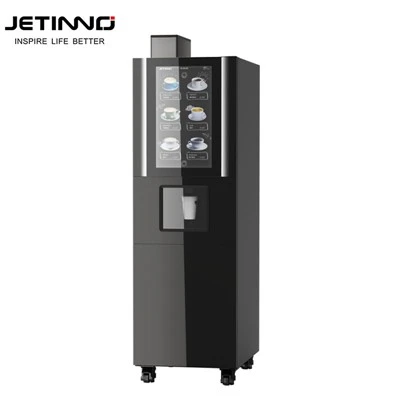

What is the water tank capacity of an automatic commercial coffee machine?
Leave a message

When you're running a café, office break room, hotel lobby, or any high-foot-traffic food service space, an automatic commercial coffee machine is more than just a convenience-it's a core part of your daily operations. One of the most common questions I get from customers exploring their options is: "What's the right water tank capacity for my needs?" As a supplier of commercial coffee equipment, I've seen firsthand how getting this detail wrong can lead to long lines, downtime, and frustrated customers. So let's break down what water tank capacity actually means for these machines, how to calculate what you need, and why it matters for your bottom line.
First, it's important to distinguish automatic commercial coffee machines from home models. Residential machines often have tanks under 2 liters, meant for one or two drinks at a time. Commercial units, though, are built to serve 10 to hundreds of drinks per day, so their water tanks are sized to match that volume. But "capacity" isn't just a number stamped on the machine's spec sheet-it also ties into other factors: how often you can restock water, the risk of running out mid-rush, and even water quality maintenance (larger tanks can mean more frequent cleaning if not properly designed).
Let's start with the basics: how do manufacturers determine tank size for automatic commercial coffee machines? It boils down to two key variables: average daily drink volume and peak demand. For example, a small office with 10 employees might only serve 20 to 30 drinks a day, while a busy convenience store in a downtown area could serve 200 to 300 drinks during morning rush hour alone.
For smaller, low-volume spaces-like a small retail shop, boutique hotel, or home office setup-you might be looking at machines with tanks between 5 and 10 liters. These are compact, easy to refill, and don't take up too much counter space. That's why our Table Top Coffee Machine bean to cup line is a popular choice here. It's designed for spaces where counter real estate is limited, and its 8-liter tank is perfect for a team of 15 to 25 people. You'll need to refill it once or twice a day, which strikes a balance between not having to bother with multiple top-ups during the day and not running out during a slow morning.
But move up to medium-volume spaces-cafés with 50 to 100 daily customers, mid-sized offices with 50 to 75 employees, or small event venues-and you'll need a larger tank, usually 10 to 20 liters. These tanks are built to handle consistent demand without frequent refills. For example, a busy café might serve 100 drinks between 7 a.m. and 10 a.m., and a 15-liter tank can keep up without you having to pause service to add water. This is also where versatility matters: many of our commercial machines not only brew coffee but can also handle tea, so you don't have to worry about adjusting tank size for drink variety. Our Fresh Brew Ground Tea Fully Automatic Machine -- JL26-BTC4C-P is a great example here; its 12-liter tank works for both coffee and tea, so you can serve a full menu without juggling multiple water sources.
High-volume spaces-large corporate break rooms, full-service hotels, convenience stores with heavy foot traffic, or event locations-need tanks over 20 liters, often up to 30 liters or more. These machines are built to serve 300+ drinks a day, with peak periods where dozens of people are ordering coffee at once. A 25-liter tank here ensures you don't run out mid-rush, which is crucial for keeping customer satisfaction high. One of our top models for this segment is the Table Top Vending Machine Cup Incorporated Touch Coffee Machine. Its 28-liter tank is designed for non-stop use, and it has a quick-heating system that ensures consistent brew temperature even when the machine is drawing water rapidly during peak times. I've seen this model installed in a downtown office with 200 employees, and they only refill the tank once a day after business hours-no more mid-morning rushes where people have to wait 10 minutes for a refill.
Wait a second-some customers ask, "Why not just get the largest tank available, even if I don't need it?" That's a fair question, and the answer has to do with efficiency and maintenance. Larger tanks hold more water, which means if the water isn't used quickly, it can go stale. Stagnant water isn't just unappetizing-it can also harbor bacteria, which is a food safety issue. Commercial machines are designed with filters and cleaning cycles, but a 30-liter tank that only has 5 liters used in a day won't benefit from those cycles as effectively. That's why tank size should match your actual usage, not just what feels like it will last. For example, if you're a small office, a 20-liter tank would be overkill-you'd have to drain unused water every few days to keep it fresh, which is a hassle. The 8-liter tank on our Table Top Coffee Machine bean to cup is sized so that it's refilled every day, ensuring the water is always fresh without extra work.
Another factor I often highlight to customers is the machine's ability to connect to a plumbed water line. Some automatic commercial coffee machines don't have a tank at all-they're designed to hook directly into your building's water supply. This is ideal for spaces with permanent access to plumbing, like fixed café counters or large office break rooms, because you never have to manually refill water. But not every space can accommodate a plumbed line-if you're in a leased space, a pop-up event, or a hotel lobby where the counter is in an area without plumbing, a tank-based machine is the way to go. All the models I've mentioned so far are tank-based, but we also have plumbable options. Our JL60A Milk Steam Wand Commercial Espresso Coffee Machine can be set up with a plumbed line, so it uses less water from a tank and is even more reliable for high-volume use.
Let's also talk about drink variety, because that affects water usage too. If your menu has multiple drinks-espressos, lattes, cappuccinos, americanos, and teas-each drink uses a certain amount of water. For example, a single espresso uses about 30ml of water, a latte uses about 150ml (espresso + steamed milk), and a brewed coffee uses 180 to 240ml. The Fresh Tea Coffee Machine Commercial Vending Machine -- JL26-ESFB4C-P is designed to handle both coffee and leaf tea, so you can adjust water flow for each, which means you don't waste water on drinks that need less. That precision also means your tank goes further, so you can serve more drinks between refills.
I've had a lot of customers come to me after buying a machine with the wrong tank size. A small café that bought a machine with a 25-liter tank found that they only used half the water in a day, so they had to drain it every other day to avoid stale water. A large corporate office, on the other hand, bought a small 5-liter tank and ran out of water every 2 hours during morning rush, leading to complaints and lost sales. That's why taking the time to calculate your daily usage is key.
Here's a simple way to calculate the right tank size for you:
- Track your total daily drink volume for a week. Add up all coffee and tea drinks served each day.
- Multiply that number by 1.5. This accounts for peak demand-you might serve 100 drinks a day, but 70 of those come in a 2-hour window, so a buffer prevents running out.
- Choose a tank size that matches that number. For example, if you serve 80 drinks a day, 80 x 1.5 = 120 drinks. Each drink uses roughly 0.1 to 0.2 liters of water, so 120 drinks would be 12 to 24 liters-but in reality, tank sizes are measured for the machine's capacity, so a 15 to 20-liter tank would work here. If you're unsure, reach out to a supplier who can help you narrow it down based on your space and menu.
As a supplier, I also want to make sure customers know that water tank capacity isn't the only thing to look at. Build quality, brew consistency, and ease of cleaning are just as important. All of our tank-based machines are made with food-grade plastic that's easy to remove and clean, so you don't have to worry about buildup. The JL31A Commercial Fresh Milk Coffee Machine, for example, has a transparent tank so you can see the water level at a glance, and the tank detaches in seconds for cleaning-no tools required.
Another point: some machines have a "water level alert" that beeps when the tank is low, which is a huge help for busy staff. This feature ensures you never run out unexpectedly, even during a rush. It's standard on most of our commercial models, including the JL30 Fresh Milk Coffee Machine , so you can plan refills without interrupting service.

If you're still unsure which tank size is right for your space, the best step is to talk to someone who works with commercial coffee machines every day. As a supplier, I've helped hundreds of customers-from small offices to large hotels-find the perfect balance between tank size, counter space, and demand. We don't just sell machines; we help you figure out what will work for your specific needs. Whether you're setting up a new break room, expanding your café menu, or replacing an old machine, we can walk you through the options that fit.
At the end of the day, the right water tank capacity for your automatic commercial coffee machine is about matching your daily operations. Too small, and you'll deal with constant refills and downtime. Too large, and you'll waste water and deal with stale water issues. By considering your space, daily drink volume, peak demand, and menu variety, you can find a machine that keeps your service running smoothly. If you're ready to explore your options, we're here to help you choose the right model for your business. Contact our team to discuss your water tank needs and find the perfect automatic commercial coffee machine for your space.
References
- Specialty Coffee Association. (2022). Commercial Coffee Equipment Specifications Guide.
- National Restaurant Association. (2021). Food Service Equipment Maintenance Best Practices.
- Hospitality Technology. (2023). Trends in Commercial Beverage Equipment for High-Foot-Traffic Venues.
- Jetinno Commercial Coffee Equipment. (2024). Product Spec Sheets for Table-Top Automatic Coffee Machines.