
How do I adjust the grind size for a commercial espresso machine?
Leave a message

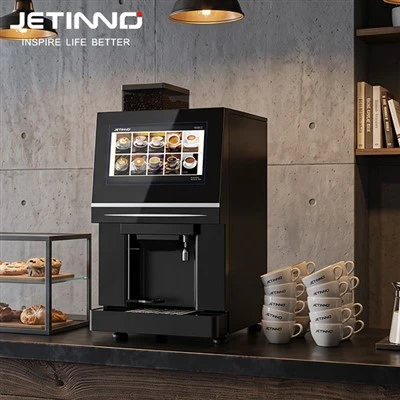
If you're running a cafe, a busy office, or even a small chain with a Commercial Espresso Coffee Machine With Touch Screen from our team, one of the most common headaches I hear from operators is "why is my espresso coming out wrong?" More often than not, it's not the machine-it's the grind size. I've been working with commercial coffee gear for years, and I've lost count of how many times clients have reached out saying their shots are too weak, too bitter, or taking way too long to pull, only to find they just need to tweak their grind.
Let's break this down like we're chatting over a quick coffee break (no fancy jargon, promise). When we talk about espresso, grind size is basically how big the coffee particles are that go into your portafilter. It sounds simple, but it's the make-or-break for a good shot, especially with commercial setups that crank out way more drinks than a home machine. If you get this right, your lattes, Americanos, and straight espresso will taste consistent all day long. If you get it wrong? You're wasting beans, wasting time, and annoying customers.


First, let's get one thing straight: commercial espresso grind isn't the same as any other grind. You can't use coarse grounds for a French press and expect it to work here. Espresso requires a fine grind-like the texture of table salt, not sand, not powder. If it's too coarse, water will rush through the coffee way too fast. That means the shot will be weak, watery, and have almost none of those rich, sweet or chocolatey notes you want. If it's too fine, water gets stuck, takes forever to pull, and over-extracts the coffee, leading to a burnt, bitter, even ashy taste. I've seen this mess up so many opening rushes when a barista panics and doesn't check the grind before service.
Now, how do you adjust this? It's not just twisting a dial and guessing-there's a method, and it's even more important when you've got a commercial setup. Let's start with the basics of when you need to adjust the grind. Every time you change your bean supplier, roast level, or even the humidity in your space, you have to tweak it. Humidity is a big one-if it's super humid, coffee particles absorb moisture and clump together, so your grind will feel finer than it is, and you'll need to go coarser. If it's dry, beans are more brittle, so you might need to go a little finer. I once had an office that kept their coffee near a humidifier; every afternoon, their shots would start pulling too slow, so we'd have them crank the grind a tiny bit to compensate.
Let's walk through the step-by-step, real-world method I teach all our clients. First, make sure your commercial grinder is set up correctly-no dull burrs, because dull burrs make uneven grinds, which mess up the shot no matter what size you pick. Our grinders work perfectly with gear like the Hot and Cold Milk Commercial Coffee Machine -- JL38B (which pairs seamlessly with our espresso machines, by the way) but if you're using a different grinder, just keep the burrs sharp. That's a non-negotiable.
Next, do a "pull test" (we call this a "shot pull" for short). Here's how to do it: dose 18-20g of coffee into your portafilter (we standardize this for our machines), tamp it evenly so the bed of coffee is flat and consistent-no lumps, no gaps. Then, pull the shot and time it. If the shot takes longer than 30 seconds (say 40+ seconds), that's your sign the grind is too fine. You need to twist the grind adjustment dial coarser-usually a quarter to half a turn at a time. Don't crank it a full turn every time, that's overkill and you'll go too far.
If the shot is done in less than 20 seconds, that's too fast. Grind is too coarse. Twist the dial finer, again just a small turn. Once you get it right, your shot should take between 25-30 seconds, and yield about 36-40g of espresso (double shot, obvi). It should have that golden, crema layer on top-thick, with little honeycomb spots-and taste balanced, not too sour or too bitter. If the crema is pale or non-existent, that's usually over-extraction (too fine) or old beans, but check the grind first.
Wait, I know what you're thinking-"what about when I'm in the middle of a rush and don't have time to do a full shot pull?" Good question. For quick checks, I tell our clients to watch the stream when the espresso first comes out. If it's a thin, splattery drip at first, and then gets a little thicker, that's coarse. If it's a thick, syrupy stream right from the start, that's fine. But don't skip the full pull when you have a minute-those quick checks are just band-aids.
Another thing: consistency is key, especially with commercial setups. If you're rotating between different drinks, or making hundreds of shots a day, don't let the grind drift. I once had a client with a big office that used an Office automatic Coffee machine 14inch that was supposed to be low-maintenance, but their barista would forget to check the grind every morning. After a week, their shots were all over the place. We scheduled them a quick daily check (5 minutes max) and it fixed 90% of their issues. It's the same with all our gear-even the countertop ones like the countertop coffee vending machine touch vending machine 14inch vertical need a quick grind tweak every few days, depending on use.
Let's also talk about common mistakes I see. Number one: adjusting the grind way too much. I've had clients turn the dial three full turns in one go and wonder why their shots are worse. Small adjustments are the name of the game. Number two: forgetting to reset after cleaning the grinder. If you take the grinder apart to clean it (which you should do regularly, by the way-old grounds go rancid and mess up flavor), you'll have to readjust the grind because the dial setting moves when you take it apart. Our machines make this easy, but it's still a step people skip. Number three: not testing with the same beans every time. If you switch from a light roast to a dark roast, you'll need to go finer for light roasts (they have more acidity, so finer grind extracts those flavors better) and coarser for dark roasts (they're more oily, so you don't want to over-extract them). That's a big one I had to learn the hard way-dark roasts from Colombia vs. light roasts from Ethiopia, same grind? Total different results.
If you're dealing with a machine that's newer, like a JL26-ES4C table top coffee machine, the grind adjustment might be digital, not a dial. Same logic applies, just use the machine's test function to pull a sample shot and tweak the settings. It's not much different, just a quick tap instead of a twist.
At the end of the day, the grind size is the foundation of a great espresso. You can have the fanciest commercial machine, the best beans, but if the grind is off, nothing works. I've seen small cafes turn their entire business around just by mastering grind adjustments, and big offices cut down on complaints about bad coffee by doing this simple tweak.
If you're running a spot and struggling with your espresso shots, or you're in the market for a new commercial setup (whether it's an espresso machine, a combo with a milk steamer, or a countertop vending machine), don't hesitate to reach out to our team to discuss your needs and the best setup for your space. We've worked with all kinds of operations, from tiny neighborhood cafes to large corporate offices, and we can help you get your grind (and your shots) right every single time.
References
- International Coffee Organization. (2021). Espresso Extraction Standards for Commercial Operations. Retrieved from ICO Specialty Coffee Guidelines
- SCAE (Specialty Coffee Association of Europe). (2020). Commercial Espresso Grind Adjustment Best Practices. SCAE Technical Manual for Coffee Equipment
- Bean Quality Association. (2022). How Humidity and Roast Level Impact Grind Requirements for Espresso. BCA Equipment Operation Guide
- Specialty Coffee Association of America. (2019). Grind Size Matching for Commercial Espresso Machines. SCAA Barista Training Curriculum for Commercial Settings