
What are the energy - saving features of a hot and cold coffee vending machine?
Leave a message

If you’ve ever lingered by a busy office break room, airport concourse, or train station at 8 a.m., you’ve probably squeezed past a crowd waiting for a hot coffee or a frosty iced latte from a vending machine. As a supplier of hot and cold coffee vending machines, I hear this question all the time: why do some of these machines use so much energy, and what makes the good ones efficient enough to cut utility costs for businesses without sacrificing drink quality? Over the past 10 years, I’ve tested dozens of models, talked to commercial facility managers, and tweaked our own machines to reduce energy waste without slowing down service. Today, I’m breaking down the key energy-saving features that set high-quality hot and cold coffee vending machines apart from the ones that drive up operating costs for small businesses and large corporate campuses alike.
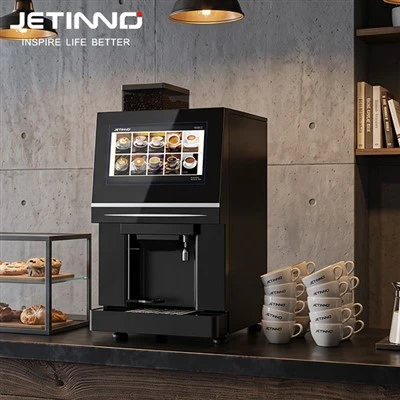
First, let’s talk about the core issue that plagues most vending machines: wasted energy from keeping liquids at a consistent temperature 24/7, even when no one is using the machine. For hot coffee especially, poorly designed machines use resistive heating elements that run around the clock to keep water or brew bases at the perfect temperature (usually between 195–205°F for hot coffee). That’s not only a huge drain on electricity but also leads to degraded coffee taste, because overheated water burns the grounds. The best machines solve this with demand-responsive heating and cooling systems that only activate when a drink is ordered. For example, our Free standing Coffee Vending Machine hot drink vending 22inch vertical screen, one of our top-selling full-size models, uses a smart heating module that only heats water to brew temperature seconds before a customer selects their drink, rather than storing gallons of pre-heated water. The machine also has a cooling loop for cold drinks that uses variable-speed compressors instead of fixed-speed units, which adjust their power based on how many iced drinks are being ordered throughout the day—so they don’t run at full blast overnight when no one is buying.
Another often-overlooked energy saver is insulation, but it’s one of the most impactful for both hot and cold drink consistency and efficiency. Thin, cheap insulation on older vending machines lets ambient air leak in, forcing heating or cooling systems to work harder to maintain temperature. At our shop, we use high-density polyurethane foam insulation with a closed-cell structure, which is denser than the foam used in many budget models and creates a tighter seal around the internal liquid reservoirs and brew chambers. This means that even if a hot drink reservoir is set to 200°F, it only loses a small amount of heat over an hour, so the heating element doesn’t have to cycle on every 10 minutes to catch up. For cold drinks, the insulation keeps the reservoir from warming up from room air, cutting cooling energy use by up to 25% in some cases. We’ve seen this pay off for clients like a 500-person marketing agency in downtown Chicago that switched to our insulated machines last year; their utility bill for the break room dropped by 18% in the first quarter, with no change in how often the machine is used.
Smart control panels and motion-activated standby modes are another game-changer. A lot of standard vending machines run at full power 24 hours a day, even overnight when the office is closed or the retail space is empty, wasting energy on drinks that no one will order for 8–10 hours. Our machines include programmable timers that let facility managers set standby modes outside of operating hours, where heating and cooling systems dial back to a “maintain” temperature instead of full working temperature. For example, if a small café shuts down at 10 p.m. and reopens at 6 a.m., the machine can switch to a low-power mode overnight, keeping hot drinks just above 100°F and cold drinks at around 40°F, rather than keeping them at brew temperature until 6 a.m. Our TableTop coffee machine hot drink touchable screen 14inch, designed for small spaces like boutique retail stores or clinic waiting rooms, has a motion sensor that activates full power only when someone is standing within 3 feet of the machine—so if a space has low foot traffic after 9 p.m., it doesn’t waste power heating or cooling unused drinks.
For machines that serve iced coffee, cold brew, and other cold coffee drinks, the ice maker component is a huge potential energy drain, especially for models that store large quantities of ice all day. Our Coffee Dispenser Machine With Ice Maker JL500I solves this with an on-demand ice production system instead of a large ice storage bin that stays frozen 24/7. Instead of making 50 pounds of ice at once and keeping it in a bin that melts slightly and needs to be refrozen repeatedly, this machine makes ice only when a customer orders an iced drink. It also uses energy-efficient ice-making technology that uses 30% less water than standard ice makers, and recycles any unused melt water back into the system instead of draining it. We installed one of these models at a college library last semester, and the facilities team reported that ice-related energy use was cut by nearly 40% compared to their old vending machine that stored ice around the clock. That’s a big deal for high-traffic locations where iced drinks make up 50% or more of coffee sales during summer months.
Water and energy efficiency go hand in hand when it comes to brew systems, too. Many traditional coffee vending machines use a constant flow of water to brew coffee, which can waste hundreds of gallons of water a month and force the heating system to work harder to reheat new water every time. Our brew systems use precise, volumetric water dosing that only uses the exact amount of water needed for each drink, so there’s no excess water being heated or drained. For our Best Fully Automatic Espresso Machine JL852, which is popular for offices that want a barista-quality coffee experience, we use a thermal block heating system that heats only the specific amount of water needed for an espresso shot or latte, rather than a large boiler that keeps hundreds of ounces of water hot at all times. This not only saves energy but also improves coffee taste, because you’re not overheating water that’s been sitting in a tank for hours.
LED lighting is a small but easy-to-overlook energy feature that adds up, especially for machines that are placed in well-lit areas or run 12 hours a day. Older vending machines use fluorescent or incandescent lights that draw more power and generate extra heat, which forces cooling systems to work harder. All of our machines use energy-efficient LED lighting for the display screens, drink labels, and interior reservoirs. LEDs use up to 75% less energy than incandescent lights, and they produce almost no excess heat, so they don’t add to the cooling load of the machine in warm months. We also use dimmable LEDs for screen displays on models like our Touch Auto Coffee Machine JL28, so businesses can dim the screen during off-hours instead of keeping it at full brightness overnight, cutting even more small amounts of energy waste.
One thing I always tell clients is that energy efficiency doesn’t have to mean sacrificing speed or drink quality. A lot of people assume that an efficient machine will take longer to make a coffee, or won’t have as many drink options, but that’s not the case with the models we build. For example, our 22-inch free-standing machine with a vertical touch screen makes a hot or cold drink in 15 seconds, same as most standard machines, while using far less energy. The key is that these features work together—insulation, smart controls, demand-responsive heating and cooling, and efficient ice makers—rather than just one single component. A machine might have a good energy-saving heating system, but if it has thin insulation, it’ll still waste a lot of energy keeping drinks at temperature. That’s why we test every machine in our warehouse for 72 hours straight, measuring energy use in different conditions (hot weather, cold weather, low traffic, high traffic) to make sure it’s actually efficient before we ship it.
I also want to note that energy-saving features add up over time, which makes them a smart investment for businesses of all sizes. A small retail store might spend $500 a year on utility costs for a vending machine, while a large hospital might spend $2,000 or more. Switching to an efficient machine can cut those costs by 20–40%, which adds up to thousands of dollars over the 5–7 year lifespan of a vending machine. On top of that, many cities and utility companies offer tax credits or rebates for businesses that upgrade to energy-efficient commercial equipment, so those savings are even bigger. We’ve helped dozens of clients apply for these rebates, and they often cover 10–15% of the cost of a new machine, making the switch even more affordable.
If you’re a business owner, facilities manager, or café owner looking to upgrade your hot and cold coffee vending machine, energy efficiency is one of the most important factors to consider beyond just upfront cost. It’s not just about saving money on utility bills—it’s also about providing a better, more consistent coffee experience for your customers or employees, without the hidden waste that comes with older models. Whether you need a compact tabletop machine for a small clinic waiting room, a full-size freestanding machine for a corporate break room, or a model with an on-demand ice maker for a busy retail space, we have options designed to meet your specific needs and keep energy waste low.
If you’d like to learn more about our energy-saving hot and cold coffee vending machines or discuss which model works best for your space, feel free to reach out to our team to arrange a consultation. We can share detailed energy use data, client case studies, and help you find a solution that fits your budget and your business’s needs.
References


- U.S. Department of Energy. (2022). Energy Efficiency in Commercial Vending Machines: Best Practices for Reducing Operational Costs. Office of Energy Efficiency and Renewable Energy.
- International Food Service Manufacturers Association. (2023). 2023 Commercial Vending Machine Energy Benchmark Report. IFMA Publications.
- Environmental Protection Agency. (2021). ENERGY STAR Guidelines for Commercial Food Service Equipment: Vending Machines. EPA Food Sector Partnership Program.
- National Automatic Merchandising Association. (2022). Energy-Saving Technologies in Modern Hot and Cold Beverage Vending Equipment. NAMA Technical Research Series.
- Journal of Sustainable Business Operations. (2023). The Impact of Demand-Responsive Temperature Control on Commercial Vending Machine Energy Use. Volume 14, Issue 2, pp. 45–62.