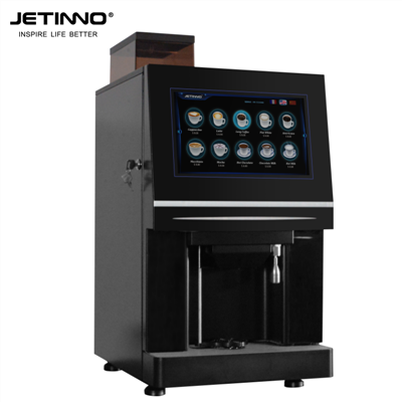

Is a commercial auto coffee machine compatible with smart home systems?
Leave a message

When I started my journey as a commercial auto coffee machine supplier, I'll admit I thought smart home compatibility was a "residential problem"-something that didn't matter for office break rooms, construction sites, or retail stores where quick, reliable coffee was all that counted. That was three years ago, when most of my customers would have rolled their eyes at the suggestion of syncing their brew equipment to a smart assistant or app. Fast forward to today, and I'm answering this exact question every week: Is a commercial auto coffee machine compatible with smart home systems? The short answer is: It depends-but the real story is how the line between "commercial" and "smart home" is blurring, and what that means for your business.
Let's start with the elephant in the room: Commercial auto coffee machines are built for high volume, constant use, and heavy wear. A residential smart coffee maker might have a 12-cup carafe and sync to Alexa to start brewing when you wake up. My top-selling Office coffee machine JL18, by contrast, brews up to 60 drinks an hour, has a direct water supply, and is rated to run 16 hours a day, five days a week. For a long time, commercial equipment operated on its own closed networks; adding smart home integration would mean bulky, unreliable hardware that couldn't handle the demand. But that's no longer the case.
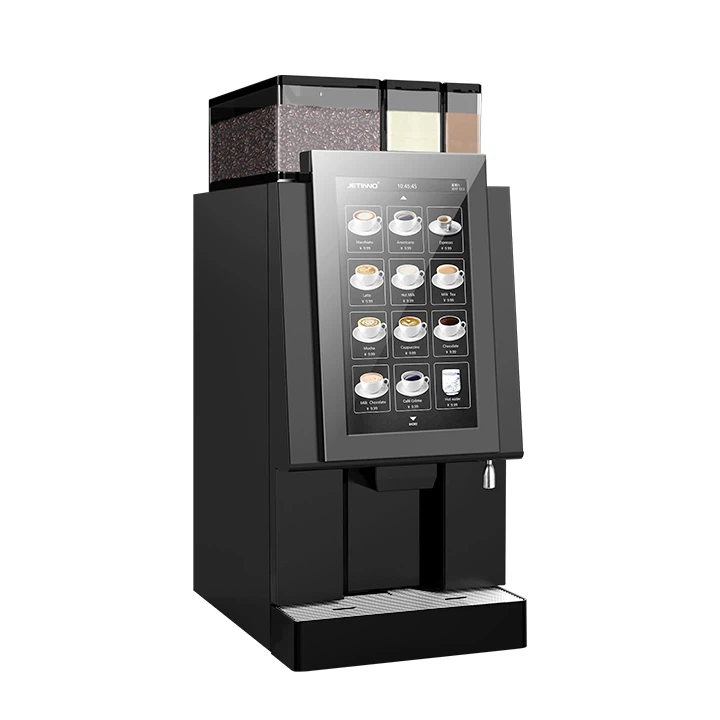
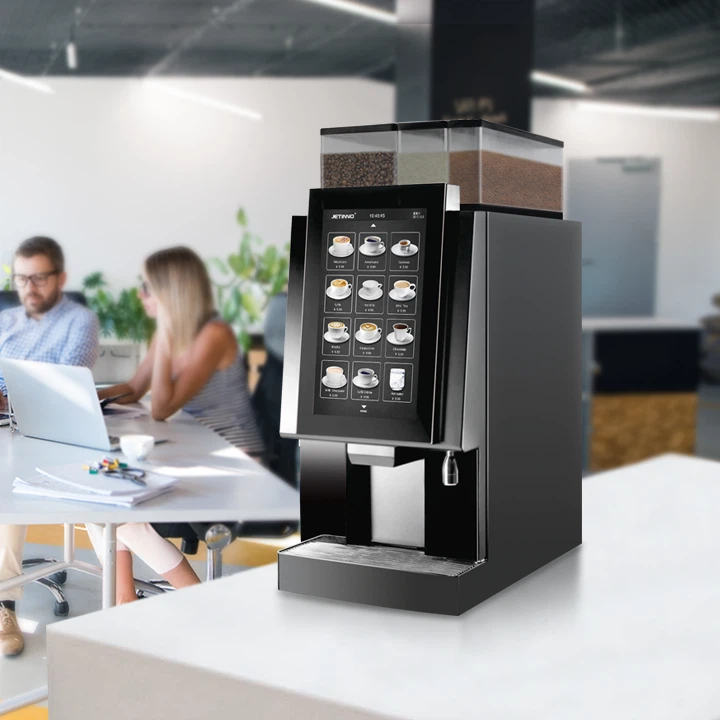
Today, the "smart" in smart home systems is no longer just for toasters and thermostats. Smart home technology has evolved into a flexible, scalable framework that commercial brands like mine can adapt-with the right design. The key difference is that commercial machines don't need the same level of hyper-personalization as a home machine. A home might let you save 10 different latte profiles, but a break room needs consistent, fast brews that are easy to monitor from a single dashboard. That's where the overlap happens: smart home systems rely on standardized protocols like Wi-Fi, Bluetooth Low Energy (BLE), and even Matter, the universal smart home connectivity standard launched in 2022. These protocols are robust enough for residential use, and we've refined them to hold up to commercial conditions.
Let's break down what "compatibility" actually means here. For a commercial auto coffee machine, compatibility with a smart home system isn't about syncing with a residential assistant-it's about two-way communication that solves real commercial pain points. Let's take a common scenario: A 20-person office with my Office coffee machine JL18 runs low on filtered water mid-day. Instead of someone having to check the reservoir, the machine can send a real-time alert to the building's smart home hub, which then triggers the office's supply team to restock. That's not a "smart home trick"-that's operational efficiency, something every commercial buyer cares about.
Another example: Predictive maintenance. Smart home systems excel at collecting small data points over time, like a coffee machine's boiler temperature, brew cycle length, and water hardness. When we build commercial machines with this data tracking, they can sync to a smart home system to flag issues before they become big problems. If the JL18's descaling schedule is approaching, the smart hub can send a reminder to the facility manager, not just a generic error code on the machine. For a café or a construction site, where downtime costs money, this is a game-changer.
Now, it's not all smooth. There are real barriers to making commercial auto coffee machines compatible with smart home systems-barriers that a lot of residential smart tech doesn't have to worry about. First is power reliability. Residential areas almost always have consistent power, but commercial locations like warehouses or event venues might have intermittent power or spotty Wi-Fi. A commercial machine needs a way to sync data even when the internet cuts out, which most basic smart home protocols aren't built for. That's why we build our machines with offline data storage-they save brew and maintenance data locally, and sync it to the smart system as soon as the connection comes back.
Second is volume. A residential smart machine might brew 2-3 drinks a day, but a commercial one like the JL18 can brew 60 in an hour. That means the data it generates is 100x more than a home device. If you tried to stream that data through a basic smart home network, you'd slow down other devices-like the smart thermostat or security system. We solved that by using edge computing: the machine processes its own data locally, only sending the most important alerts and insights to the smart system, not every single brew cycle. It's a middle ground that works for both commercial demand and smart home infrastructure.
There's also the elephant of misconceptions: A lot of people think "smart home" means controlling every little thing from your phone. For commercial buyers, that's not a feature-it's a nuisance. No one at a construction site wants to fumble through an app to adjust coffee strength between morning and afternoon. The best commercial smart compatibility is unobtrusive. It lets the facility manager get alerts if the machine is broken, run low on milk, or needs a filter change, without forcing the person using it to interact with the smart system at all. That's a lesson we learned early on when we tested our first connected prototype: commercial users just want their coffee, not a smart accessory.
Let's talk about real-world use cases, because theory only goes so far. Last year, we installed 15 JL18 machines at a regional call center in Chicago. Their smart home system was already synced to all their office equipment-from HVAC to vending machines. We worked with their IT team to make the machines compatible, using a cloud-based gateway that bridged their existing smart home network to our machine's hardware. The results? They cut maintenance calls related to the coffee machines by 40%, because they could track issues in real time, instead of waiting for someone to flag a problem. They also reduced waste: because they only restocked milk and pods when the machine sent an alert, they stopped throwing away expired inventory that had been sitting in the break room fridge for weeks.
Another case: a small boutique hotel in Austin that uses our JL22-ES4C Espresso bean to cup coffee machine for their lobby bar. The JL22 is built for smaller commercial spaces, so it's not as high-volume as the JL18, but it has smart compatibility features tailored to hospitality. They sync it to their smart home system to run a pre-programmed "welcome brew" every morning at 7 a.m.-the exact time their front desk opens. The system also sends alerts when powdered milk is running low, so the housekeeping team can restock before guests arrive. For a small hotel, this isn't a luxury-it's a way to offer consistent service without adding extra staff hours.
Now, if you're a business owner reading this, you might be wondering: Is this worth the extra cost? That's a fair question. Adding smart home compatibility to a commercial auto coffee machine usually adds 10-15% to the upfront price, but the ROI is real. The call center I mentioned earlier saved an estimated $8,000 a year in maintenance and inventory costs. The boutique hotel reduced the number of complaints about broken or empty coffee machines by 75% in six months. For small businesses, that's money that goes straight back into the bottom line.
But here's the catch: Not all commercial auto coffee machines are compatible with smart home systems. If you buy a cheap, no-frills machine from a big-box store that's built for minimal features, it's not going to have the Wi-Fi hardware, data processing, or durability to sync with a smart system. That's why it's important to work with a supplier who designs their commercial machines with smart compatibility in mind from the start, not as an afterthought. Our JL18 and JL50 models, for example, are built with modular smart hardware, so we can upgrade their compatibility as smart home standards evolve-no need to replace the entire machine down the line.
What's next for this space? Matter, the universal smart home protocol, is changing the game. We're already testing new models that use Matter to connect directly to any smart home or commercial building management system, no extra gateways needed. That means a retail store could sync a coffee machine to their existing smart lighting and security system, and a construction site could connect it to a portable smart power monitor, all without complicated setup. The line between commercial and residential smart tech is going to keep blurring, and the best commercial machines will be the ones that can work seamlessly with any smart ecosystem, regardless of size or industry.
At the end of the day, the answer to "Is a commercial auto coffee machine compatible with smart home systems?" is a resounding yes-if you choose the right machine, from a supplier that understands both commercial needs and smart tech. It's not about turning your break room into a sci-fi set; it's about using technology to make your operations smoother, reduce downtime, and save money. For small offices, hotels, construction sites, and retail stores, that's not a nice-to-have-it's a necessity in a world where every part of a business is becoming connected.
If you're looking to upgrade your coffee setup with a commercial auto coffee machine that's built to work with your smart home or building system, we're here to help. Our team can walk you through compatibility options, test prototypes, and find a solution that fits your exact needs. Don't settle for machines that require manual checks or constant maintenance-reach out today to start a conversation about integrating smart, efficient coffee into your space.
References
- Consumer Technology Association. (2023). Smart Home Market Report: Commercial and Residential Convergence. Retrieved from CTA.org
- International Data Corporation. (2024). Commercial Internet of Things (IoT) in Food Service: Key Use Cases and Growth Trends. Retrieved from IDC.com
- National Coffee Association. (2023). Office Coffee Equipment: Operational Efficiency and User Satisfaction Survey. Retrieved from CoffeeUSA.org
- Connectivity Standards Alliance. (2022). Matter Protocol: Specifications for Commercial and Residential Device Interoperability. Retrieved from CSA-Alliance.org