

How do I improve the crema on espresso made by a commercial machine?
Leave a message

Hey there! If you're running a coffee shop, cafe, or even a small eatery that serves espresso, you know crema is non-negotiable. That rich, golden-brown foam on top of a shot of espresso isn't just for show-it's a sign you're pulling a high-quality shot, and it's what keeps regulars coming back for their morning latte or cappuccino. As someone who works in commercial espresso machines, I get questions about crema all the time, and most people don't realize it's way more than just "pulling a good shot"-it's a mix of machine settings, bean prep, and even daily maintenance. Let's break down exactly how to level up the crema on your commercial machine, no fancy barista certification required.
First, let's get the science out of the way simply: crema is that frothy layer made of carbon dioxide trapped in tiny oil bubbles from roasted coffee. When hot water (just the right temp, pressure, and time) forces through finely ground coffee, those oils and gases release, and they mix with a little water to form crema. If your crema is thin, pale, or disappears in 10 seconds, something's off in that process. And since I sell commercial machines, I've seen where small fixes go wrong all the time-from people not calibrating their machine regularly to using old, pre-ground coffee that kills the CO2 before it even hits the portafilter.
Let's start with the commercial machine itself. You can have the best beans in the world, but if your machine is out of whack, crema will suffer big time. First up: pressure. The ideal pressure for espresso extraction is 9 bars, right? A lot of commercial machines drift over time-especially if they're used heavily 12+ hours a day-and that pressure drops, leading to weak crema. Here's the thing: if your machine is semi-automatic, you can test pressure with a cheap gauge (most baristas have these) or, if you're on a fully automatic model, the system should have a pressure setting you can adjust. Wait, if you're looking for reliable fully automatic options, check out this 14-inch touch screen machine that's built for consistent pressure: Tabletop Coffee Tea Automatic Coffee Machine touch screen 14inch. It's designed to maintain steady pressure even after hundreds of shots, which is a game-changer for consistent crema.
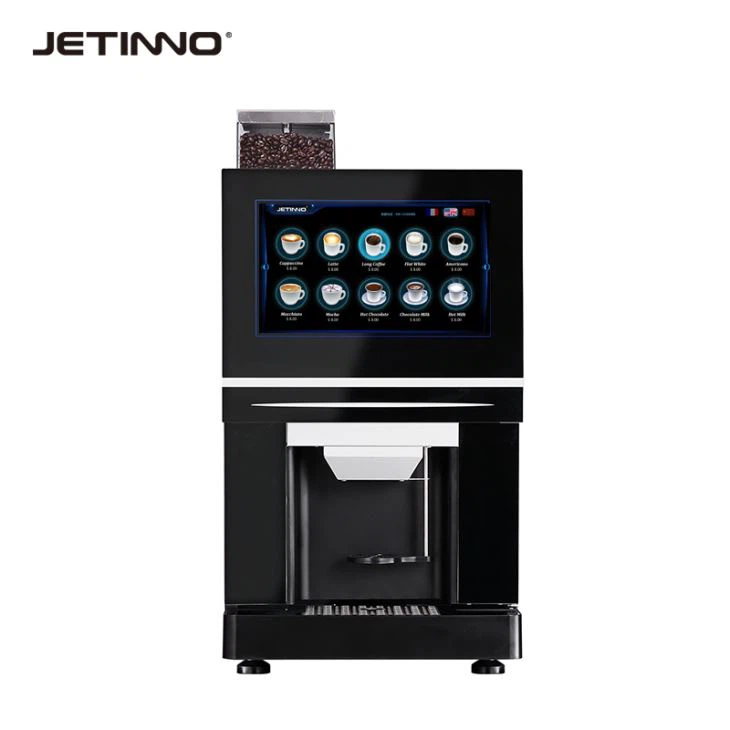

Next, water temperature. Too hot, and you'll burn the coffee oils, making crema bitter and thin. Too cold, and you won't extract enough, so crema will be pale and watery. The sweet spot is between 195°F and 205°F (90°C to 96°C). But here's a pro tip: commercial machine boilers can have hot and cold spots, so it's good to check water temp in multiple places in the group head-not just the machine's display. If your machine is a bean-to-cup model, you want one that controls water temp per group, not just a single boiler. That's why this top-rated table top machine is worth a look: Table top Best Automatic Coffee Machine -- JL26-BTC4C-P. It keeps water temp consistent across all groups, so every shot you pull has the same crema, no matter how busy the shift is.
Now, grinding. This is where a lot of new shop owners mess up. You can't use pre-ground coffee for espresso-even if it's labeled "espresso grind"-because the CO2 starts escaping immediately after grinding. For the thickest, long-lasting crema, you need to grind beans fresh right before pulling a shot. But it's not just "fresh"-the grind size has to be perfect. If your grind is too coarse, water will flow through too fast, under-extracting, so crema will be thin and disappear. Too fine, and water gets stuck, over-extracting, leading to a dry, acrid crema. For commercial machines, the grind setting is usually adjustable, so start small: if your shots take 10 seconds or less, grind finer. If they take 30+ seconds, grind coarser. Keep testing until you get a 25-30 second pull, and that's when crema will be that rich, 1/4 inch golden layer you want. And if you're running a high-volume spot, a good automatic machine that handles fresh beans without wasting them is key-check out this espresso-focused model: Premium Fully Automatic Coffee Machine JL38A. It grinds to order, so no stale beans killing your crema.
Wait, let's talk about bean quality and prep too, since that ties directly to crema. Dark roast vs light roast? Dark roasts have more oils, which means more crema-but they can get bitter if over-extracted. Light roasts have less oil, so crema will be lighter in color, but if you get a specialty light roast with high CO2 content, it can be just as creamy. Pro tip: always use coffee roasted within 2 weeks of the roast date. After that, the CO2 starts dissipating, so even the best grind will make thin crema. And store beans in an airtight container, away from light and heat-never leave them in the bag they come in, especially in a hot cafe. I've seen shops leave beans out on the counter, and within a week, their crema is gone. That's a simple fix that makes a huge difference.
Daily and weekly machine maintenance is another big one I see overlooked. A lot of commercial machine owners skip cleaning the group head, and that build-up of old coffee oils and residue messes with extraction. If your group head is clogged, water can't flow evenly, so some parts of the puck are over-extracted and some are under, leading to spotty crema. You should backflush your machine at the end of every day with a proper espresso machine cleaner, and wipe the group head with a dry cloth after every 50 or so shots. If you're using a fully automatic machine, most have a built-in cleaning cycle, but you still need to follow the schedule-like this 14-inch touchscreen super automatic, which has easy maintenance prompts to keep your group head clean: Tabletop Automatic Coffee Machine Espresso 14inch. It eliminates a lot of manual cleaning, so you don't have to worry about missed steps.
Another thing: tamping. A lot of people think tamping is just "press down hard," but it's about even pressure. If your tamp is lopsided, some parts of the coffee puck are denser than others, so water flows unevenly, leading to uneven crema that breaks fast. The ideal tamp is 30 pounds of pressure, but you don't need a fancy tamp to get that-just make sure you're pressing straight down, not at an angle. Practice makes perfect, and if you're training staff, make tamping a part of their routine, not an afterthought. I've seen shops where new baristas don't tamp right, and their crema is inconsistent until they get the hang of it.
Wait, what about hot weather? If your cafe is super hot, the machine's water can warm up a bit, even with the boiler set right, which can lead to over-extraction and thin crema. A quick fix: check your machine's water reservoir and make sure it's kept in a cool spot, away from direct sunlight or ovens. If you're using a machine that has a separate water cooling feature, that's a bonus-something the top commercial models offer to keep water temp stable, even in busy, warm environments.
Let's put this all together into a quick checklist to make it easy:
- Check machine pressure is steady at 9 bars (adjust if needed, or upgrade a machine that can hold pressure consistently)
- Verify water temp is 195-205°F, no hot/cold spots in the group head
- Grind beans fresh right before shots, adjust grind size for 25-30 second pull
- Use beans roasted in the last 2 weeks, store airtight away from heat/light
- Tamp evenly with consistent pressure
- Clean group head daily with backflushing and regular wiping
Now, if you're in the market for a commercial machine that takes the guesswork out of all this, I've got options for every volume. For small cafes or spots that do 50-100 shots a day, the JL26-BTC4C-P is perfect-it's reliable, easy to maintain, and keeps crema consistent. For busier spots (100+ shots a day), the super automatic with the 14-inch touchscreen takes care of pressure, temp, and grinding automatically, so you can focus on serving customers instead of tweaking settings. And if you need a machine that does both espresso and other drinks, the Instant drink commercial coffee and tea maker machine 14 inch is built for flexibility, so you don't have to compromise crema when making other drinks like lattes or americanos.
At the end of the day, crema isn't magic-it's the result of consistent, small steps. Whether you're tweaking your current machine's settings or looking to upgrade to a model that makes consistency easier, the key is attention to detail. If you're ready to level up your espresso crema and make every shot count, reach out to us to check out the machines that work best for your shop's needs. Don't hesitate to ask questions-we're here to help.
References
- "Espresso Extraction Basics: The Science Behind Crema", Specialty Coffee Association, 2023
- "Commercial Espresso Machine Maintenance Best Practices", Coffee Equipment Manufacturers Association, 2022
- "Bean Freshness and Its Impact on Espresso Quality", Journal of Coffee Science and Technology, vol. 11, no. 2, 2021


